
Contemporary residential design is undergoing a noticeable shift—furniture is gradually “disappearing.”
This disappearance does not mean reducing the number of furniture pieces but rather breaking the boundaries between furniture and architectural space. Increasingly, high-end homes are adopting integrated cabinet designs, making storage systems an inherent part of the spatial structure.
From entryways and living rooms to bedrooms and walk-in closets, cabinets are no longer just add-on furniture but an essential component of the overall design.
For Baodao Home, the value of full-house customization has never been merely producing cabinets—it lies in systematized spatial design, achieving true unity of function, storage, and aesthetics.
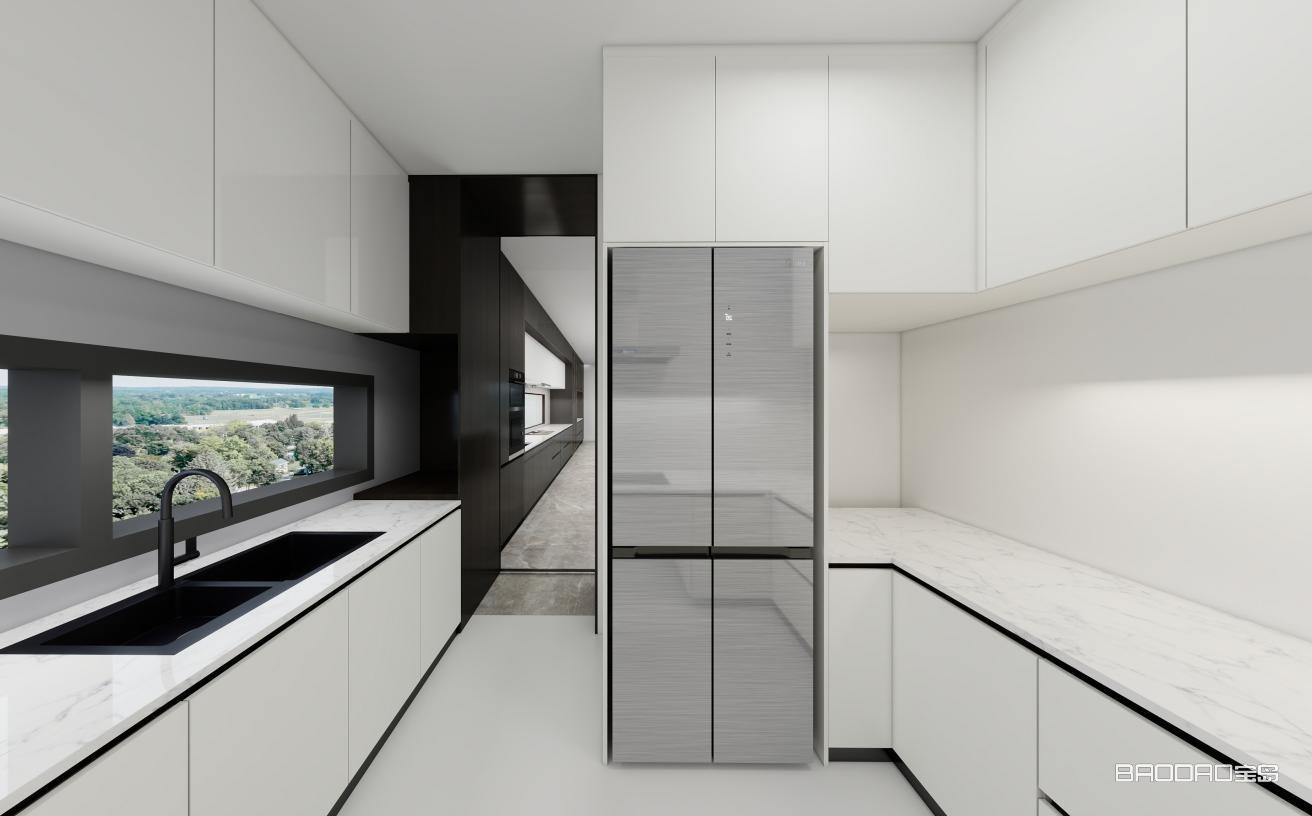
Many believe that minimalist style means fewer cabinets and fewer items.
In fact, it’s the opposite. The more minimalist a space, the more it requires a robust storage system.
All daily items must be properly hidden for the space to remain clean and orderly.
Traditional furniture often introduces:
• Visual fragmentation
• Disrupted spatial proportions
• Scattered storage
• Inconsistent style
Integrated cabinets, however, unify materials, proportions, and structural language, creating a complete visual order.
This is why many high-end homes can maintain a clean, minimalist look even with ample storage.
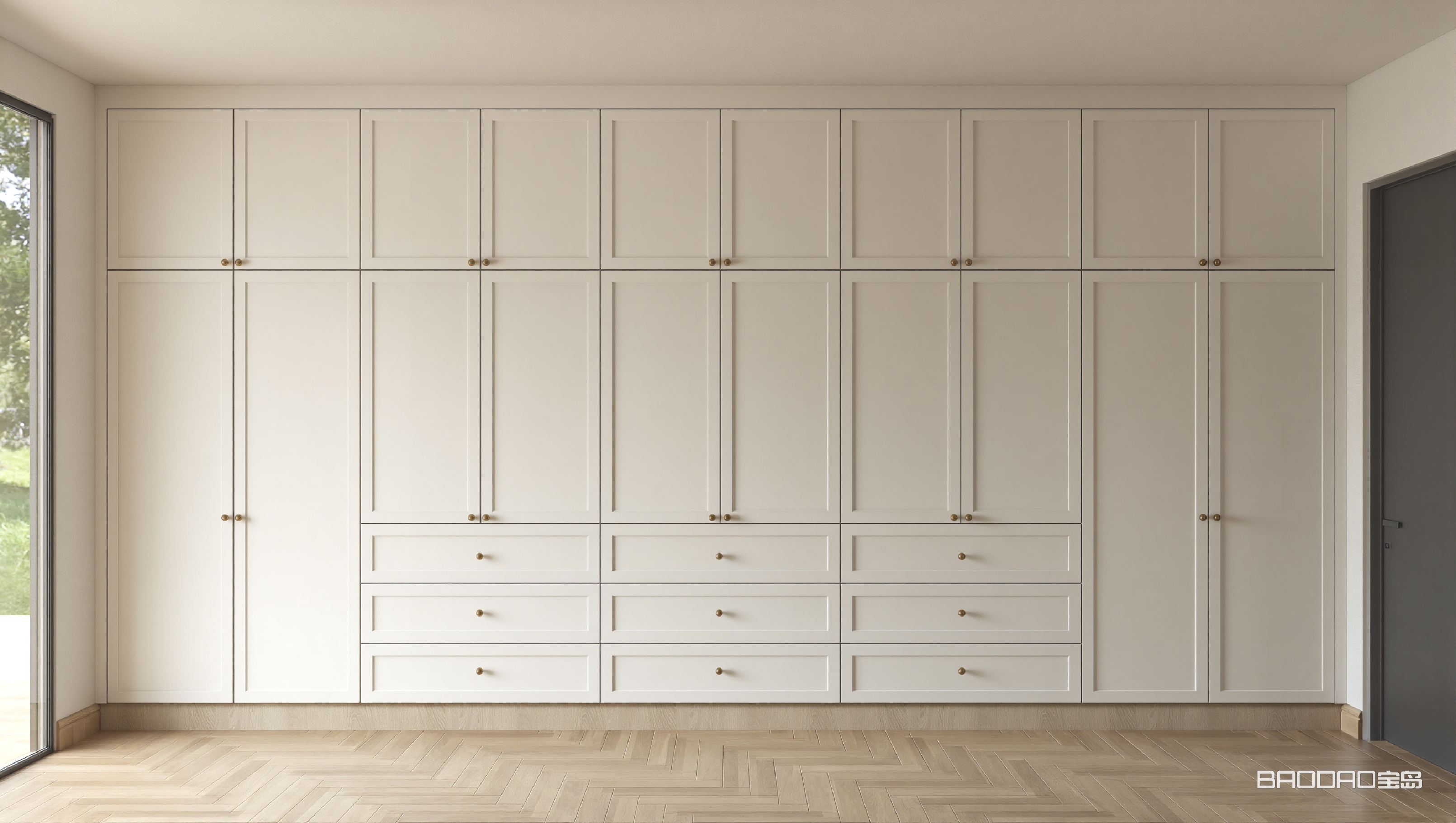
One of the biggest advantages of integrated design is softening the boundaries of space.
Traditional wardrobes, bookcases, and TV cabinets exist as separate entities, whereas integrated cabinets feel like a part of the architecture itself.
For example:
• Cabinets extending directly to the ceiling
• Cabinet doors aligned with wall surfaces
• Storage systems embedded into architectural structures
• Furniture designed to merge with feature walls
With more continuous visual lines, spaces feel more open.
In many Baodao Home projects, floor-to-ceiling cabinets and hidden storage systems are key design strategies to enhance the sense of space.
For homes with limited square footage, this approach is often more effective than simply enlarging the space.
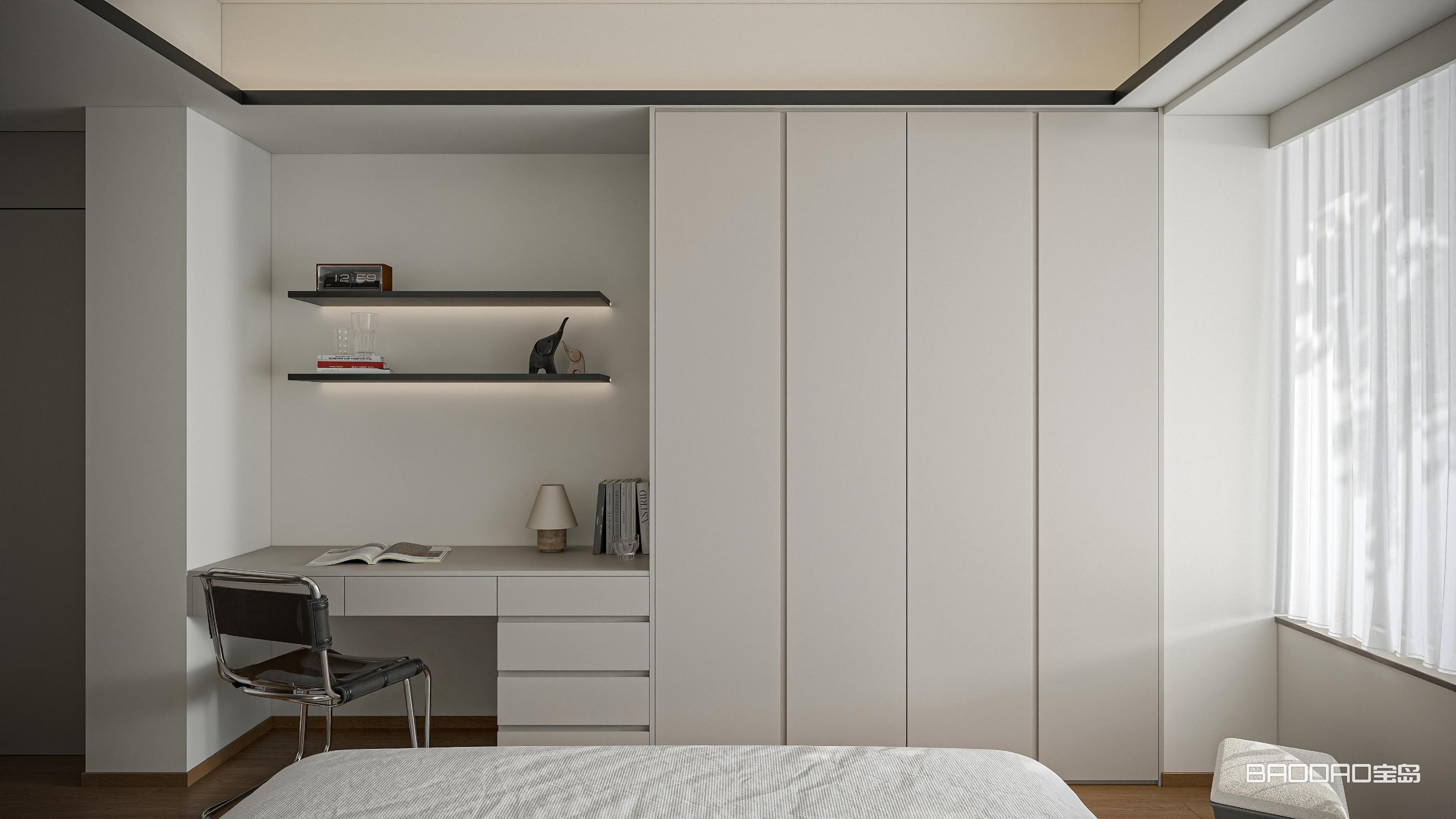
Many families’ problems aren’t about insufficient cabinets but a lack of systematic planning.
Excellent storage design doesn’t mean more cabinets—it means creating a logical daily workflow.
In Baodao Home projects, design teams plan according to living habits:
• Entryways organize daily shoes and outerwear
• Living rooms integrate display and storage
• Kitchens establish a complete operational workflow
• Bedrooms implement categorized storage systems
• Walk-in closets balance display and organization needs
When every item has a fixed place, spaces naturally remain tidy over time.
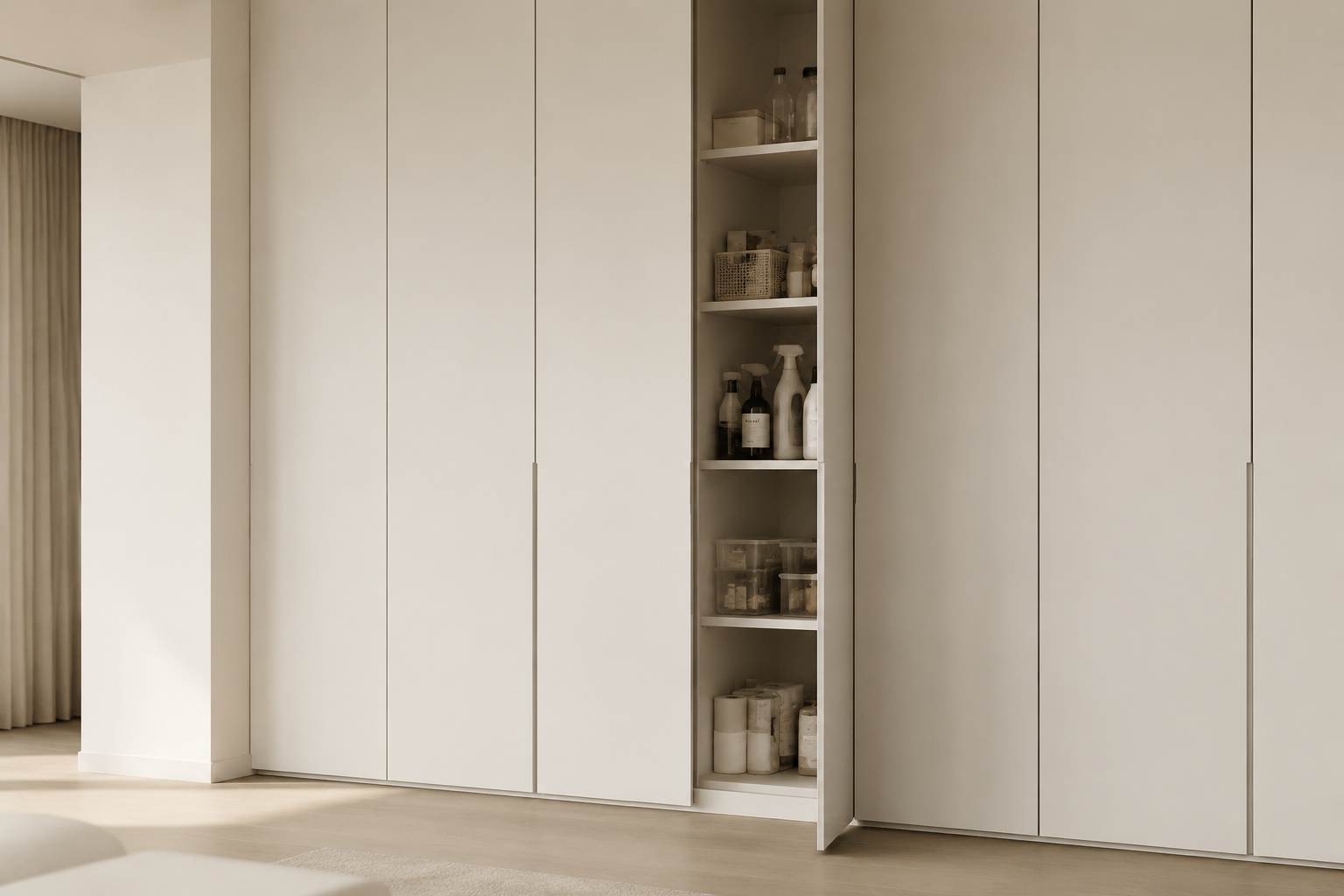
A defining feature of high-end homes is cohesion.
A space may have beautiful individual furniture pieces, but when combined, it may lack sophistication.
The issue often lies in inconsistent design language.
Integrated cabinets establish a complete material system and visual logic.
For example:
• Warm wood finishes throughout the home
• PET cabinet doors with consistent color relationships
• Glass systems providing layered displays
• Matching edge banding maintaining detail continuity
From entryway to bedroom, a unified design language naturally conveys a higher sense of refinement.

From Customized Cabinets to a Customized Lifestyle. Today, people no longer simply want furniture—they want a spatial system suitable for long-term living.
The value of integrated cabinets extends beyond storage.
They establish order, improve efficiency, enhance aesthetic cohesion, and allow lifestyle habits to align naturally with spatial design.
For Baodao Home, full-house customization is never merely about producing cabinets—it’s about integrating design, materials, craftsmanship, and spatial planning to create a comfortable, cohesive, and long-lasting living environment.
Because truly excellent residential design does not make furniture the centerpiece—it makes life the centerpiece.

Block Quote